
Students discover ecosystems are delicate balancing acts where every organism plays crucial roles. Through investigating crashing honeybee populations or solving Manny Mantis's pesticide protest, conducting nature walks mapping organism connections, experiencing "Dice of Destiny" environmental stressors simulating population changes, and designing solutions protecting threatened coral reefs and wetlands, students learn ecosystem changes ripple through entire webs—complex problems rarely have simple solutions.
- Lesson 1
Solve: Wolf Population Mystery + Vocabulary Mind Map
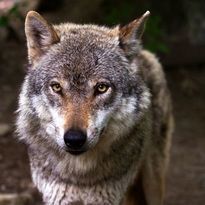
The Yellowstone wolf controversy erupts—ranchers say wolves kill livestock and scare away tourists, while conservationists argue wolves maintain biodiversity and have far-reaching ecosystem impacts. Students follow Mosa Mack as she investigates both perspectives, weighing pros and cons of different solutions (remove wolves? relocate them? compensate ranchers? create protective zones?). By the end, they discover that complex biodiversity problems can have multiple valid solutions—each with tradeoffs that must balance human needs with ecosystem health.
- Lesson 2
Make: Schoolyard Biodiversity
Take a biodiversity nature walk around your schoolyard. Students photograph or sketch every organism they find (plants, insects, birds, fungi), identify species using field guides and online databases, then create poster diagrams showing how organisms connect in food webs. Next comes the "Dice of Destiny"—roll to encounter an environmental stressor (drought? invasive species? pollution? habitat loss?). Students predict ripple effects through their schoolyard ecosystem and create split-posters showing biodiversity before and after the stressor hits. Small changes, big consequences.
- Lesson 2

Extension: Ecosystem Threats
As an environmental guide for Eco Tours Company, students will construct food webs to investigate the cycling of matter and energy in the savanna, ocean, and desert ecosystems. They will use their food webs to analyze major ecosystem disruptions to support or refute the claim that an event occuring in one part of the ecosystem will not impact the region's biodiversity. (90 minutes)
- Lesson 3

Engineer: Create and Compare Competing Design Solutions to Maintain Biodiversity
Choose a threatened ecosystem (coral reefs? rainforests? wetlands? prairies?) and design a solution to preserve its biodiversity and ecological services. Students research specific threats (climate change, deforestation, pollution, overfishing), engineer solutions—maybe it's artificial reef structures, wildlife corridors, water filtration systems, or native plant restoration—build prototype models, then present and evaluate each other's designs. Real conservation challenges meet engineering design process.
- Next Generation Science Standards
- Inquiry Scale
- Common Misconceptions
- Vocabulary
- Content Expert
- Leveled Reading
* To give our users the most comprehensive science resource, Mosa Mack is piloting a partnership with RocketLit, a provider of leveled science articles.
- Bringing it Back
This article gives students an intro to important considerations when looking at human impact. We define renewal, and describe the importance of biodiversity. Students are also introduced to human cause erosion and the importance of water to the health of an ecosystem.
- Webs Are Not Only For Spiders
Food webs are much more complicated than a simple food chain, and they show the way that energy is exchanged by organisms. Since there are so many different thing connected in ecosystems, balance of each resource is very important and difficult to maintain.
- Changing Ecosystems, Changing Populations
As ecosystems change due to human influences, we're noticing the potent impacts of biuodiversity loss. In this article, we introduce students to both overfishing and the effects of a monoculture

RocketLit serves NGSS aligned reading at 7 reading levels.
RocketLit serves NGSS aligned reading at 7 reading levels.
RocketLit serves NGSS aligned reading at 7 reading levels.
- Bringing it Back