
Students master how air mass motions and complex interactions cause weather changes. Through solving wedding weather disasters or tracking storm time-lapses showing sudden shifts, rotating through six stations investigating temperature, humidity, air pressure, ocean currents, landforms, and weather fronts interpreting maps providing accurate updates, and designing meteorologist weather reports predicting regional patterns explaining causes scientifically, students learn forecasting using air mass knowledge.
- Lesson 1
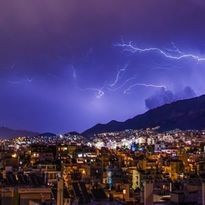
Solve: Time-Lapse Storm + Wedding Weather Mystery
Mia and Henry's wedding business is crumbling—two weddings depend on specific weather conditions! Tropical wedding: storm ruins plans. Arctic wedding: no snow appears. Students help Mosa solve the mystery by exploring common weather factors. The discovery: air masses (large bodies of air with similar temperature and humidity) interact differently in different regions. Tropical regions: warm humid air masses can create intense storms when they meet cooler air. Arctic regions: cold dry air masses don't always produce snow—temperature and moisture must both be right. Understanding air mass characteristics and collisions explains why weather varies regionally and why predictions sometimes fail. Both weddings saved!
- Lesson 2

Lab: Investigate Weather Factors
Six station investigations exploring factors impacting weather. Station 1: Temperature/Latitude—balloon in freezer contracts (cold air), balloon in warm water expands (warm air), latitude affects temperature. Station 2: Humidity—water vapor in air affects precipitation. Station 3: Air Pressure and Wind—high/low pressure systems drive wind patterns. Station 4: Ocean Current Temperature—warm currents (Gulf Stream) moderate coastal climates, cold currents cool regions. Station 5: Landforms—mountains create rain shadows (Sacramento vs. Carson City, Yakima vs. Seattle—windward side wet, leeward side dry). Station 6: Weather Fronts—cold/warm/stationary fronts create different conditions. Interpret weather maps providing accurate regional weather updates.
- Lesson 2

Extension: Model Weather Fronts
Students plan and act out a model of the various factors that contribute to a weather front of their choice. (150 minutes)
- Lesson 3

Engineer: Become a Meteorologist
Act as meteorologists designing weather reports! Students research 5-day weather data for chosen regions, analyze patterns in temperature, pressure, wind direction, humidity, precipitation, identify trends, then predict Day 6 weather explaining causes using air mass knowledge. They design professional weather reports (poster presentations or video recordings) including: current conditions, 5-day data visualization, Day 6 forecast, scientific explanations of weather factors (approaching cold front? high pressure system? ocean current influence? mountain effects?), and presentation delivery with meteorologist flair. Practice communicating complex weather science to general audiences like real TV meteorologists!
- Next Generation Science Standards
- Inquiry Scale
- Common Misconceptions
- Vocabulary
- Content Expert
- Leveled Reading
* To give our users the most comprehensive science resource, Mosa Mack is piloting a partnership with RocketLit, a provider of leveled science articles.
- Climate vs Weather in the Arctic
This article uses at the Arctic as an example of the difference between Climate and Weather. We also define Temperature and Climate Change, specifically talking about the data over time that's needed to show the Climate is changing. Even though temperatures change over the course of a year, that doesn't mean the climate is changing.
- Water Doesn't Just Fall From the Sky
To read this sentence, you need to look through water that's floating in the air as humidity. This article explains that you won't be able to see this water until the dew point is reached or as this water gathers in the sky as clouds.
- Rain or Shine?
In this article, students learn about the basics of weather and the patterns that we see. Weather is the way the atmosphere looks at one moment, but climate is how we describe what the weather is generally like all the time. Students also learn about seasons in different parts of the world.
- The Air Around You is REALLY Pushy
Right now, the air is pushing down on you. In the sky, how much the air is pushing will change what the weather looks like. This article explains the ideas behind low pressure, and high pressure and a front.
- How to Mess Up Your Hair
The only thing students might know about wind is that it really messes up their hair. This article talks about how uneven heating, convection, and the Coriolis effect work together to produce wind.
- Your Very Own Pet Water Drop
In this article, students read about the basic steps in the water cycle. The article discusses what causes most of the evaporation, how water drops gather together in the sky and why they fall back down to earth.
- The Hydrologic Cycle
This article is a more rigorous and thorough version of the "Your Own Pet Water Drop" article to introduce students to the Water (Hydrological) Cycle. This article details all the steps of the Water (Hydrological) Cycle and goes into additional detail to explain water reservoirs and groundwater.

RocketLit is an adaptive reading platform that serves NGSS aligned Science articles at 7 different reading levels.
RocketLit is an adaptive reading platform that serves NGSS aligned Science articles at 7 different reading levels.
RocketLit is an adaptive reading platform that serves NGSS aligned Science articles at 7 different reading levels.
RocketLit is an adaptive reading platform that serves NGSS aligned Science articles at 7 different reading levels.
RocketLit is an adaptive reading platform that serves NGSS aligned Science articles at 7 different reading levels.
RocketLit is an adaptive reading platform that serves NGSS aligned Science articles at 7 different reading levels.
RocketLit is an adaptive reading platform that serves NGSS aligned Science articles at 7 different reading levels.
- Climate vs Weather in the Arctic